News
Product updates, roadmap plans and worked examples from the WebCAE team.
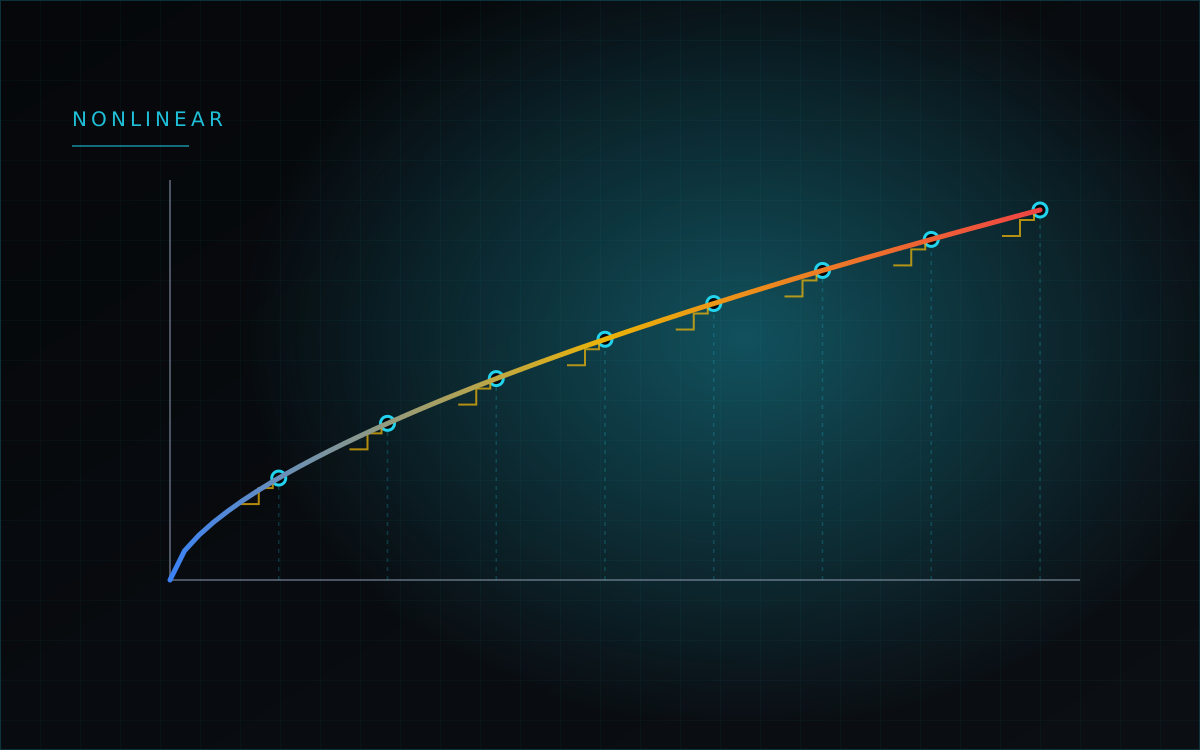
Nonlinear solve by increments: automatic step size and a Newton convergence chart
A nonlinear problem is not solved once. The load is applied in increments, the step size adapts to how hard each one turns out to be, and a new chart shows how many Newton iterations each increment cost — and where the solver had to back off and retry.
Read more →
Frictionless contact: surfaces that open, close and report their status
Contact pairs are rebuilt on the deformed shape at every load step, the results are kept step by step, and the viewport shows what each zone is doing — open, active or stuck — along with the contact pressure on it.
Read more →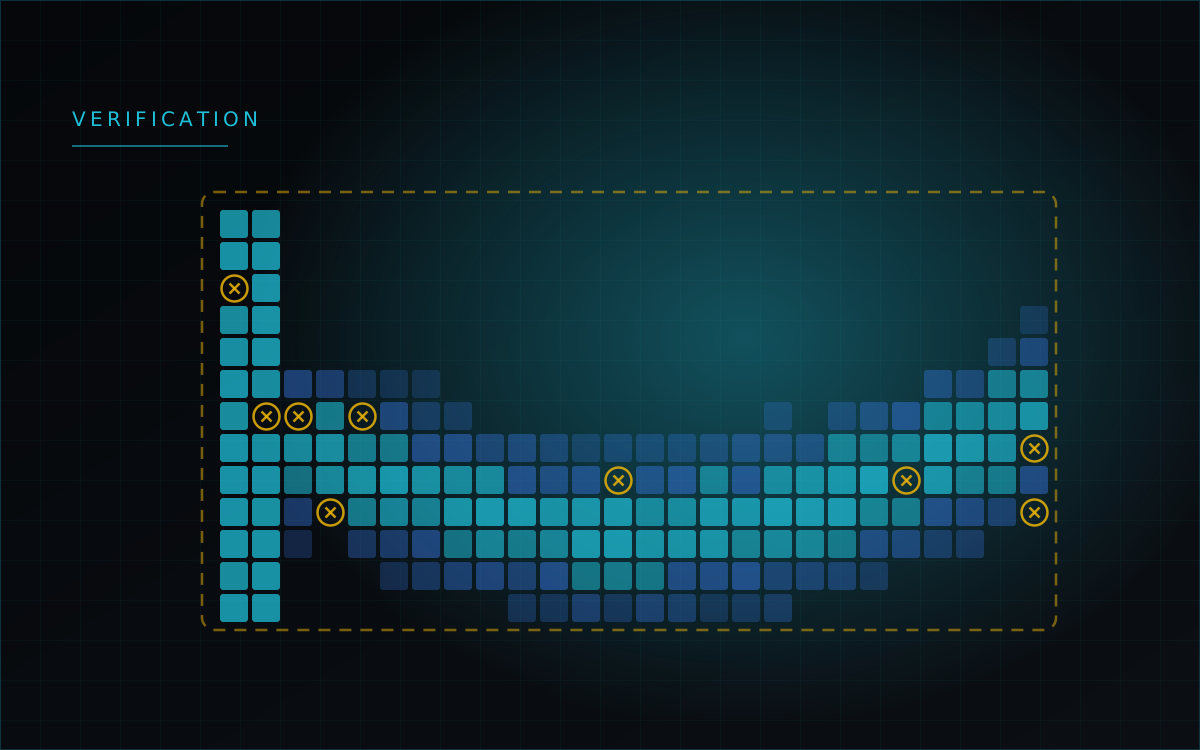
A run that finishes is not an optimization that works: our own audit of the topology module
We reviewed our topology optimization against what it would take to call it verified, and published the gap: ten specific defects, a three-stage plan, and a rule for ourselves — until the re-analysis runs on the remeshed geometry, we do not call the result a CAD solid.
Read more →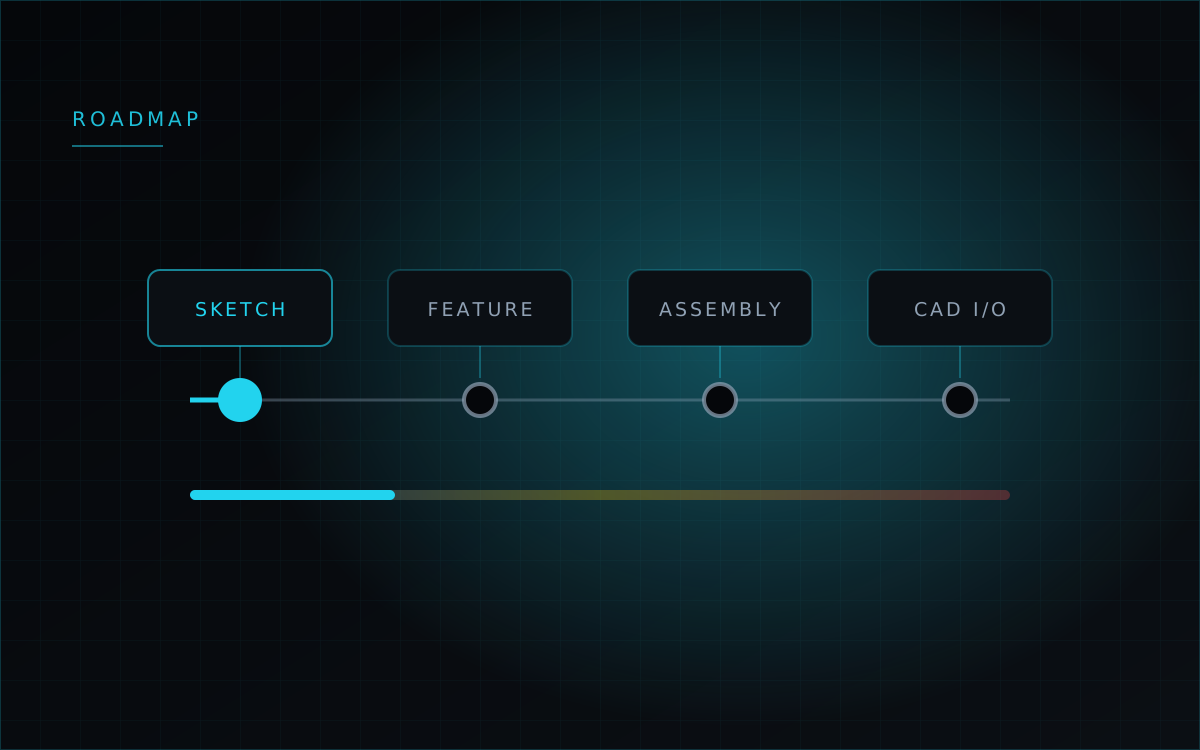
Where the CAD side is going: sketches, features, assemblies
Our target is a solid mid-range mechanical CAD — roughly FreeCAD Part Design or basic Fusion 360 — not a SolidWorks competitor. Here is the sequence: constrained sketches, real features with history, proper assemblies, and one rule about how geometry is addressed that we will not bend.
Read more →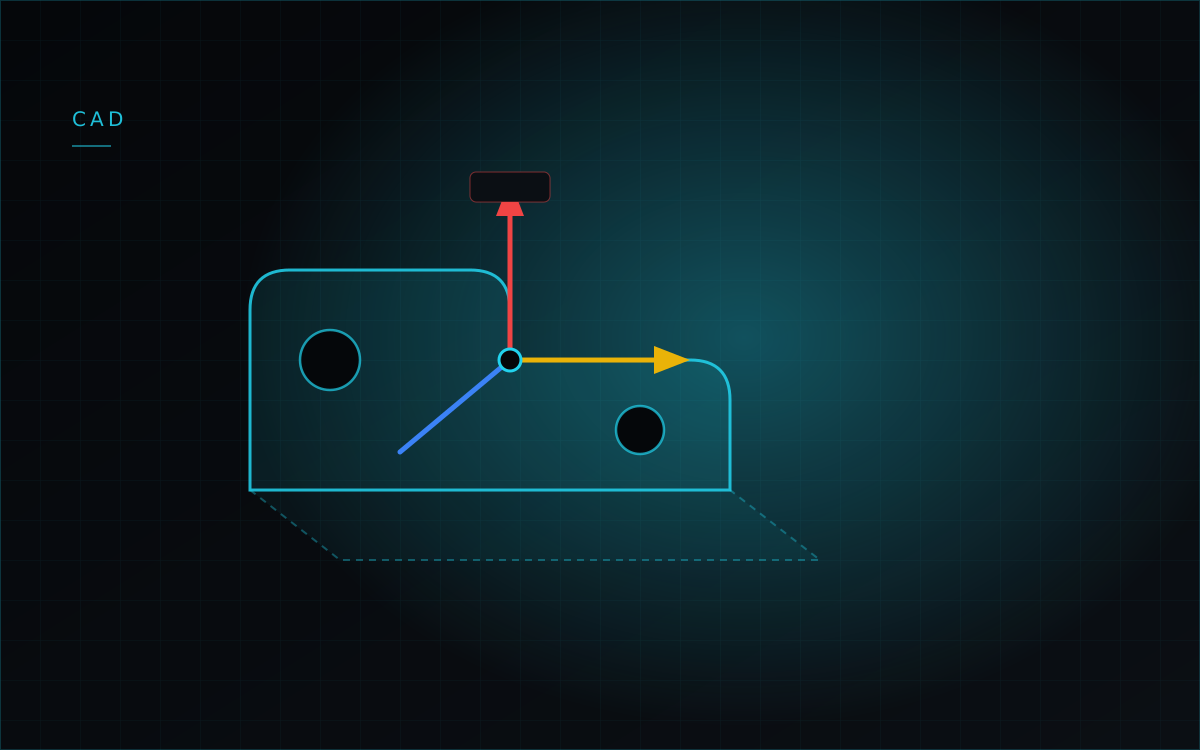
Build geometry, don't just import it: Pull, Create and a rebuilt CAD panel
Extrude a line into a surface and a surface into a solid by dragging a gizmo in the 3D view. Close a loop of lines into a face, close a set of faces into a watertight body. And twelve repair and defeature operations now sit in four flyout groups instead of one long list.
Read more →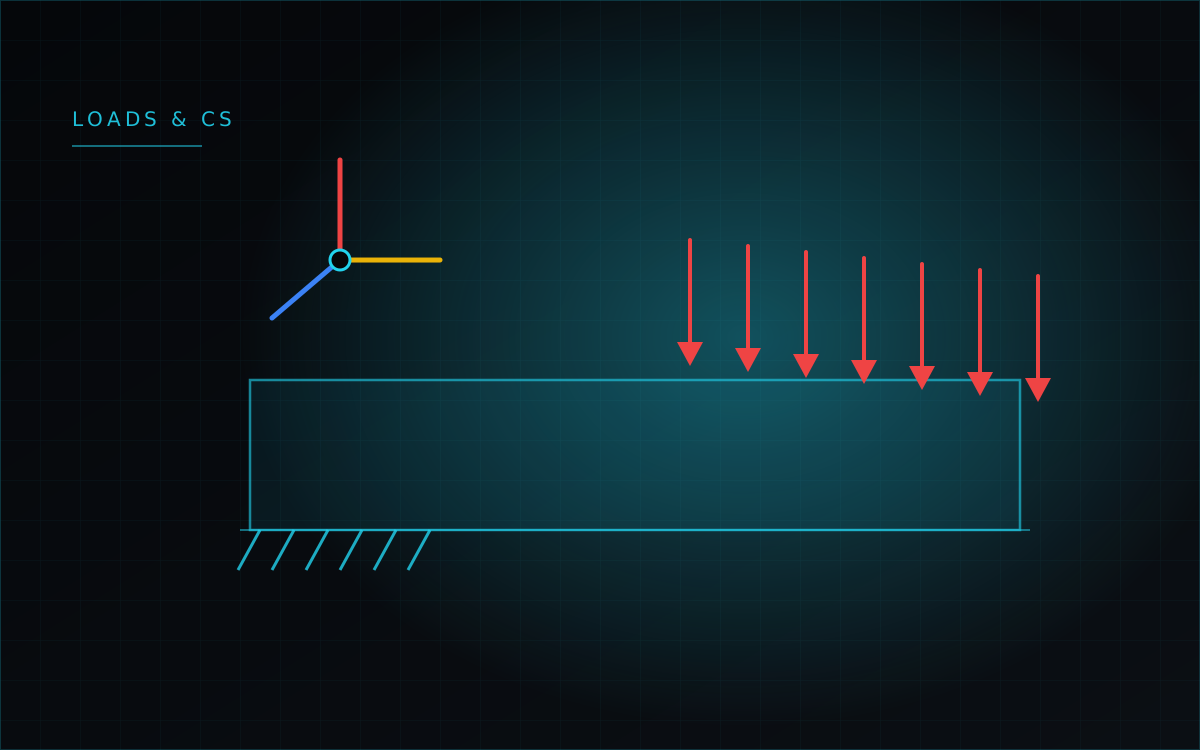
Loads you can see before you apply them
A force is now one entry with a vector instead of three separate ones, arrows are drawn at the centroid of the entity and point outward, and the preview appears while you are still filling in the form. Plus edge loads, coordinate systems built by picking, and a normal constraint that refuses to quietly compute the wrong problem.
Read more →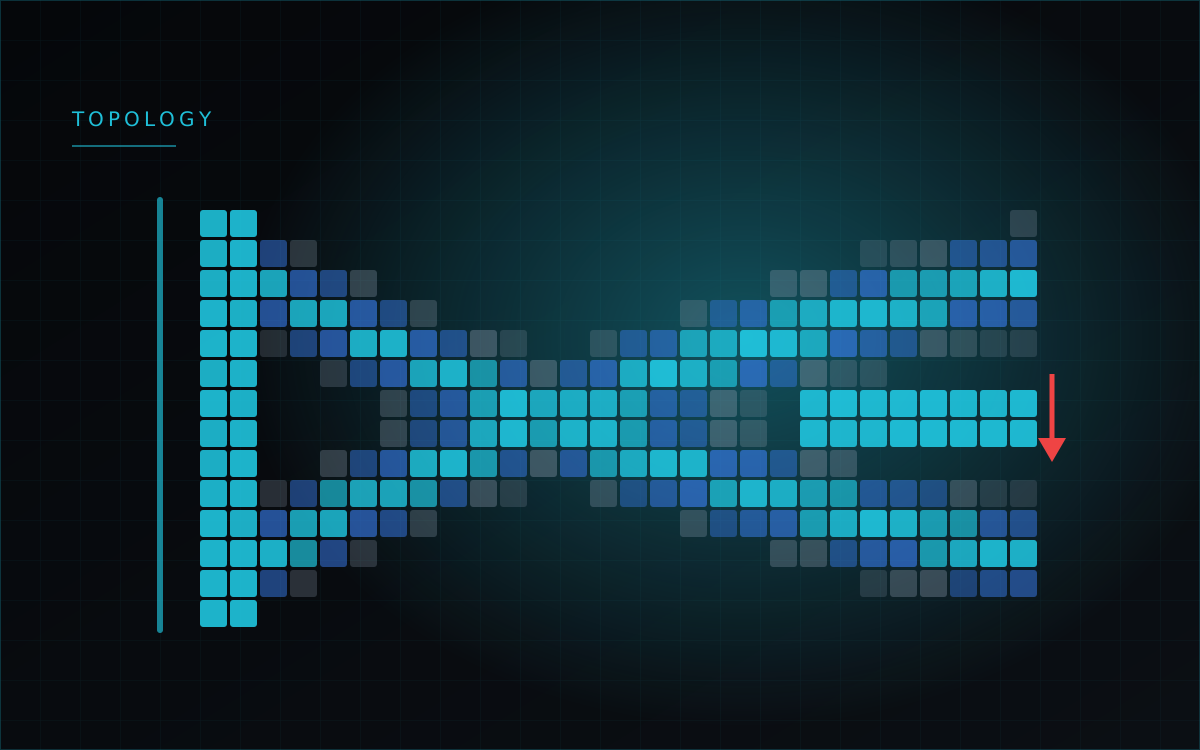
Topology optimization: SIMP, optimality criteria and a slider through every iteration
Give it a design space, loads and supports, ask for 40% of the volume, and watch the material find the load path. First-order and second-order tetrahedra and hexahedra, a second optimizer for mixed constraints, and the result comes back as a body in the model tree.
Read more →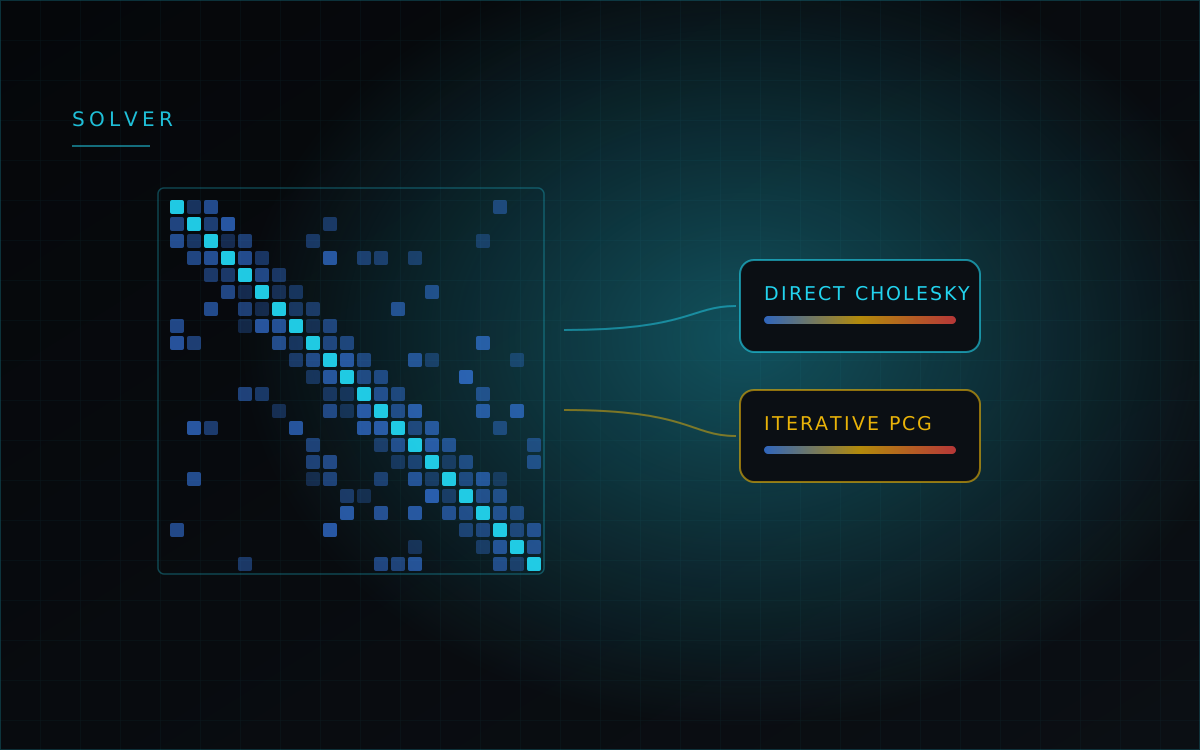
Direct solver on Apple Accelerate: 120,000 DOF in 3.8 s instead of 87
The desktop build now factorizes the stiffness matrix through Apple's Accelerate sparse Cholesky. On a 120,000-DOF model that is 3.8 s against 87.2 s for the previous direct solver — and the ceiling for the direct path on macOS moved from 120k to 300k DOF.
Read more →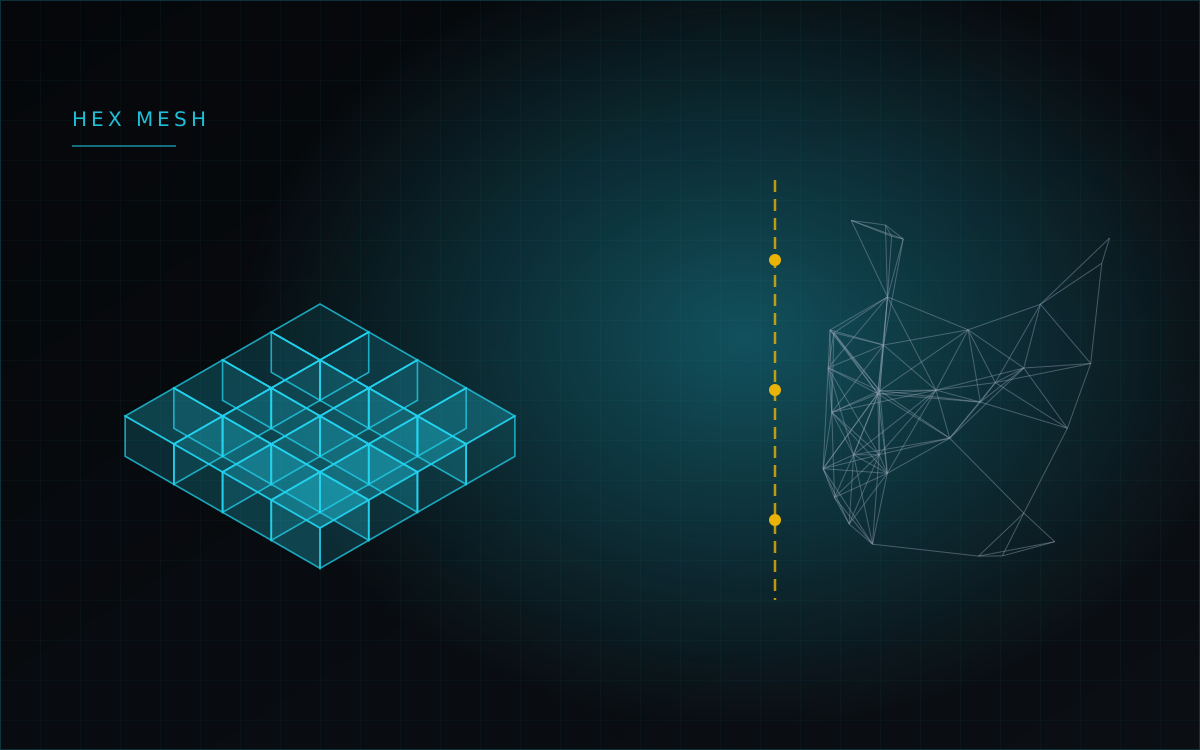
Hexahedra where accuracy is decided, tetrahedra everywhere else
Structured hexahedral blocks around holes, fillets and shafts, joined to the surrounding tetrahedral mesh through multipoint constraints — and built by temporarily cutting the CAD solid rather than by shoving nodes around.
Read more →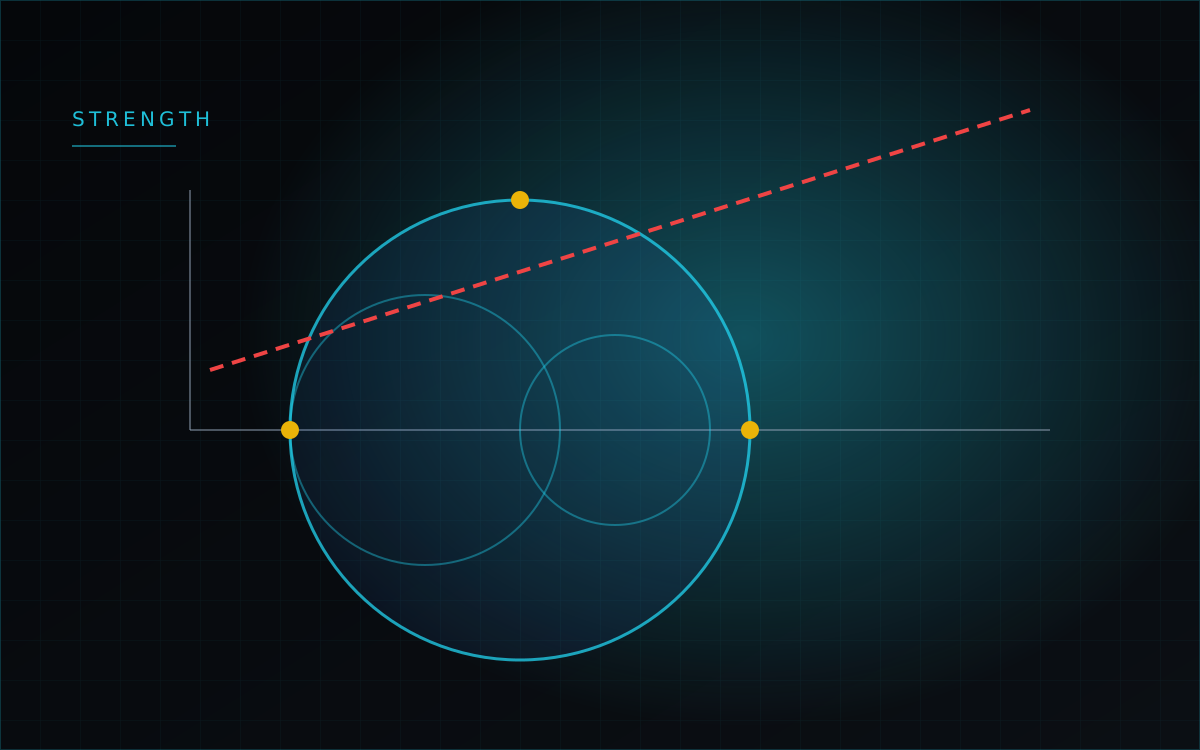
Nine failure criteria, and a safety factor you can change without re-solving
Von Mises is the right answer for ductile metals and the wrong one for cast iron, concrete or a shaft under a million cycles. WebCAE now offers nine criteria — including Mohr-Coulomb, Drucker-Prager and three fatigue lines — and switching between them is instant.
Read more →
The desktop build, and exactly what it sends home
WebCAE Desktop runs the native engine on your machine, works offline with a signed licence file, and installs on Windows without administrator rights. It also sends a small amount of telemetry — so here is the complete list of fields, and the switch that turns it off.
Read more →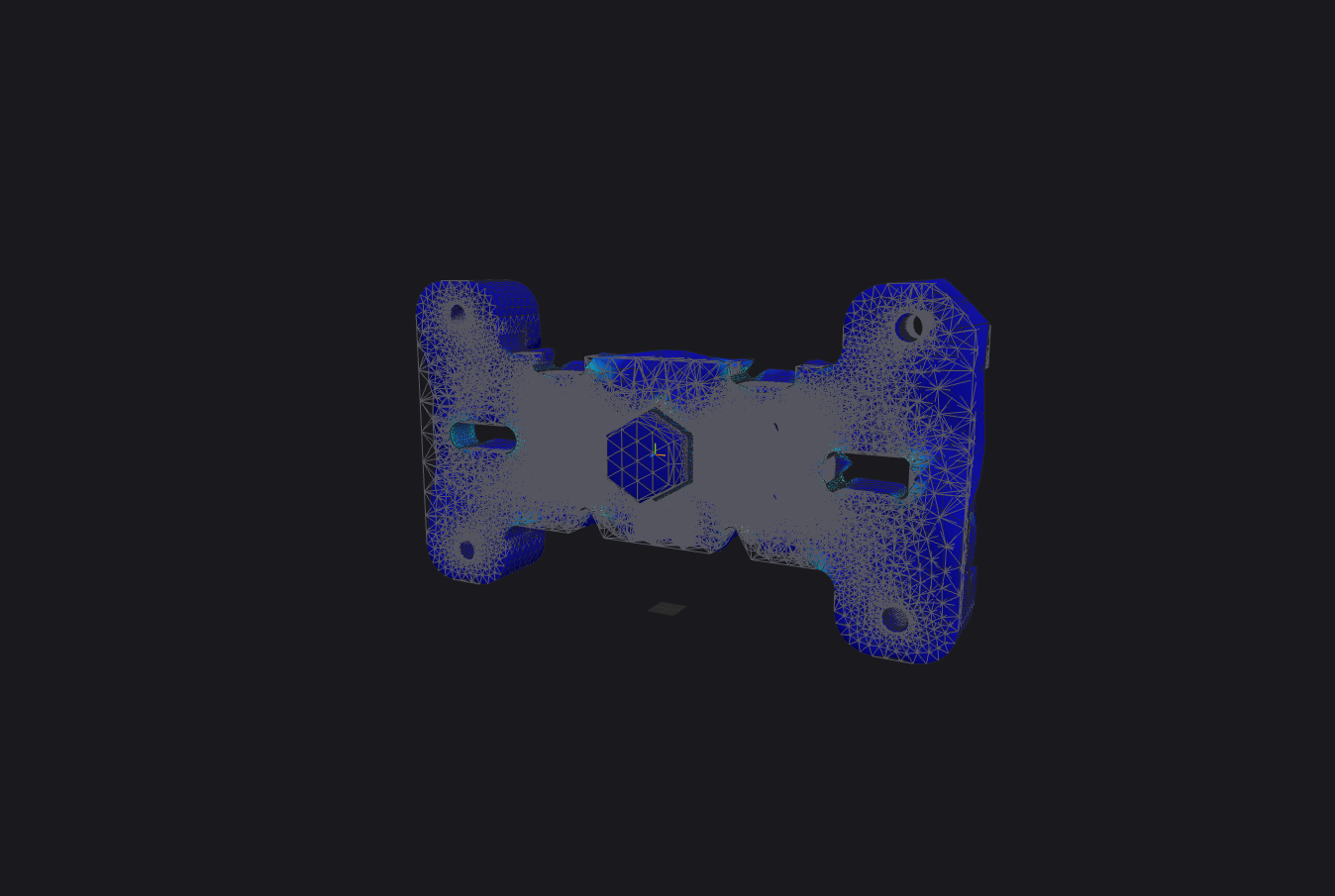
Stress analysis of a bracket — right in the browser
We imported a STEP model of a reference mechanical bracket, meshed it, applied a load, and got a full stress and displacement field — no install, entirely in the browser.
Read more →